

Air Rifles 101: Power Systems, Accuracy, and How to Choose the Right One
Quick Answer
An air rifle is a shoulder-fired airgun that uses compressed air or gas, rather than gunpowder, to launch a pellet or BB. For most buyers, the most important difference between one air rifle and another is the power system, because that system determines how the rifle is operated, how it recoils, how consistent it feels from shot to shot, and how much effort it takes to keep shooting.
The main power systems most buyers will encounter are spring piston, gas ram, CO2, NitroAir, and multi-pump pneumatic. Spring piston and gas ram rifles are self-contained mechanical systems. CO2 rifles use compressed carbon dioxide in cartridges and are usually easier to operate between shots. NitroAir uses pre-filled nitrogen cartridges at high pressure to deliver a cartridge-powered shooting experience without the usual fill equipment associated with traditional PCP ownership.
The best air rifle is not the one with the biggest advertised velocity. It is the one whose system matches the way you actually plan to shoot. If you want independence and long-term simplicity, spring piston or gas ram often makes sense. If you want low recoil and easy backyard use, CO2 and NitroAir are often more attractive. If you want a deeper side-by-side comparison, see Spring vs Gas Ram vs CO2 vs NitroAir Air Rifles: Which System Is Best?
Air rifles are often discussed as if they are one simple category. In practice, two rifles that look similar can behave very differently once they are shouldered and fired. One may reward disciplined hold technique and follow-through. Another may feel almost recoil-free but depend on cartridges and environmental conditions. Another may offer higher-pressure consistency without asking the owner to buy a compressor or fill tank. That is why a smart buying decision starts with system knowledge, not cosmetics.
This guide is built to give you that system-level understanding. It explains what the major air rifle power systems are, how they affect real-world shooting, and how to choose the right one for your space, experience level, and priorities. It also connects to the rest of your planned content cluster so this page can function as the root authority piece, not as a standalone blog post. For foundational mechanics, see How Air Rifles Work: Complete Guide to Airgun Mechanics. For the performance side, see What Affects Air Rifle Accuracy: Power, Pellets, and Technique Explained (https://www.umarexusa.com/air-rifle-accuracy-factors).
What an Air Rifle Power System Actually Changes
A power system is the mechanism an air rifle uses to generate, store, and release the pressure that launches the pellet. That sounds technical, but it is the variable that shapes almost everything the shooter feels. It affects how much effort is required before the shot, how the rifle behaves during the shot, what supplies or maintenance the rifle depends on, and how consistent the rifle feels over a shooting session.
This is where many buyers go wrong. They compare caliber, velocity, or optics packages first, when those are really secondary factors. The system sits upstream of all of that. It influences whether the rifle is better suited to backyard shooting, learning fundamentals, casual plinking, or a more consistency-focused shooting routine. A rifle that is easier to shoot well is often more useful than one that merely looks more impressive in a product grid.
The easiest way to think about air rifle systems is in terms of tradeoffs. Spring piston and gas ram rifles are attractive because they are self-contained. CO2 and NitroAir are attractive because they reduce physical effort and usually produce a smoother shooting experience. Multi-pump rifles can give the shooter more control over stored pressure, but only by adding repetitive manual effort before every shot. None of those systems is automatically best. Each is solving a different problem.
That is also why this guide focuses on behavior rather than marketing language. The goal is not just to define system types. The goal is to help you understand how those systems work in practice, why their tradeoffs matter, and how to choose one that still fits your needs after the first few shooting sessions.

How the Main Air Rifle Power Systems Work
Every air rifle uses stored pressure to push a pellet down the barrel. What changes from one design to another is how that pressure is created, how stable it remains, and how much internal movement happens when the shot breaks. That difference is what creates the distinct feel of each system.
Spring Piston Air Rifles
A spring piston air rifle stores mechanical energy in a coiled spring. When the rifle is cocked, that spring is compressed. When the trigger breaks, the spring drives a piston forward, which compresses air behind the pellet and launches it. The Ruger Blackhawk .177 Combo is a clear example of this traditional design.
What matters in real use is that the rifle contains moving mass during the shot cycle. The spring and piston create a distinct firing behavior that is different from a firearm and different from cartridge-based systems. This is why spring rifles are often described as technique-sensitive. In practice, small changes in hold, follow-through, or shoulder pressure can show up on target more clearly than many new shooters expect.
The practical upside is simplicity. A spring rifle does not require CO2 capsules, nitrogen cartridges, a hand pump, or a compressor. If you want a self-contained pellet rifle with low operating complexity and no dependency on consumable power sources, spring piston remains one of the strongest options in the category. That is why it is still a common entry point for shooters who value independence more than ultimate convenience. For the mechanical-only comparison, see Spring Piston vs Gas Ram Air Rifles: Differences, Pros, and Real-World Performance (https://www.umarexusa.com/spring-vs-gas-ram-air-rifles).
Gas Ram Air Rifles
A gas ram rifle, also called a gas piston rifle, replaces the coiled spring with a sealed gas strut. The overall system is still mechanical. You cock the rifle, store force in the internal gas strut, and release that force to drive a piston. The Ruger Targis Hunter Max .22 is a good example.
The reason shooters separate gas ram from traditional spring piston is the shot cycle. Gas ram rifles still require cocking and still have recoil characteristics that the shooter has to manage, but many shooters find them smoother and less buzzy than a conventional coiled-spring rifle. In practical terms, that can make them feel a little more forgiving, especially for someone who wants the simplicity of a mechanical rifle without the traditional springer feel.
The tradeoff is that gas ram does not change the basic ownership model. You still cock the rifle before each shot. You still work within the rhythm of a mechanical platform. For some shooters, that is part of the appeal. It keeps the rifle self-contained, slows the pace of shooting in a good way, and avoids dependence on cartridges or fill gear.
CO2 Air Rifles
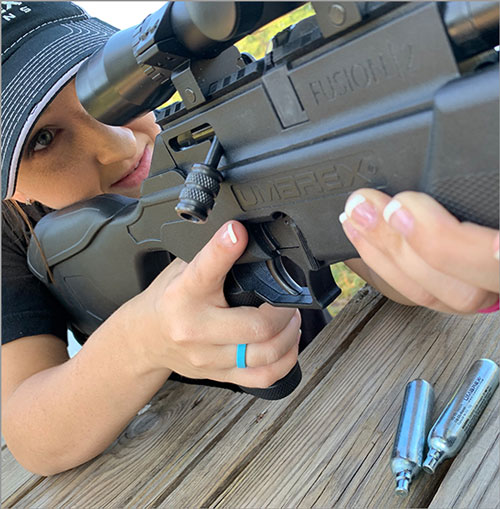
A CO2 air rifle uses compressed carbon dioxide stored in cartridges rather than storing energy mechanically in a spring or gas strut. That changes the whole shooting experience. The rifle usually feels easier to operate, follow-up shots are faster, and the shot cycle is smoother. The Umarex Fusion 2 Quiet CO2 Pellet Rifle is a strong example. Umarex highlights it for quiet shooting, and says it can run on two 12-gram CO2 capsules or an 88-gram cylinder.
That ease is a big reason CO2 remains popular for backyard target shooting and casual plinking. The shooter does not need to break a barrel, compress a spring, or manually pump the rifle before every shot. If the goal is approachable, low-recoil shooting that encourages repeated use, CO2 is still one of the most practical systems in the airgun world.
The limitation is consistency under changing conditions. Carbon dioxide pressure changes with temperature, and CO2 performance can drop in colder conditions or during rapid shooting because the system cools as gas is used. That does not make CO2 a poor system. It means CO2 is best understood as a convenience-first system with known performance tradeoffs. For the most relevant system comparison, see CO2 vs NitroAir Air Rifles: Key Differences in Performance and Consistency.
NitroAir Air Rifles
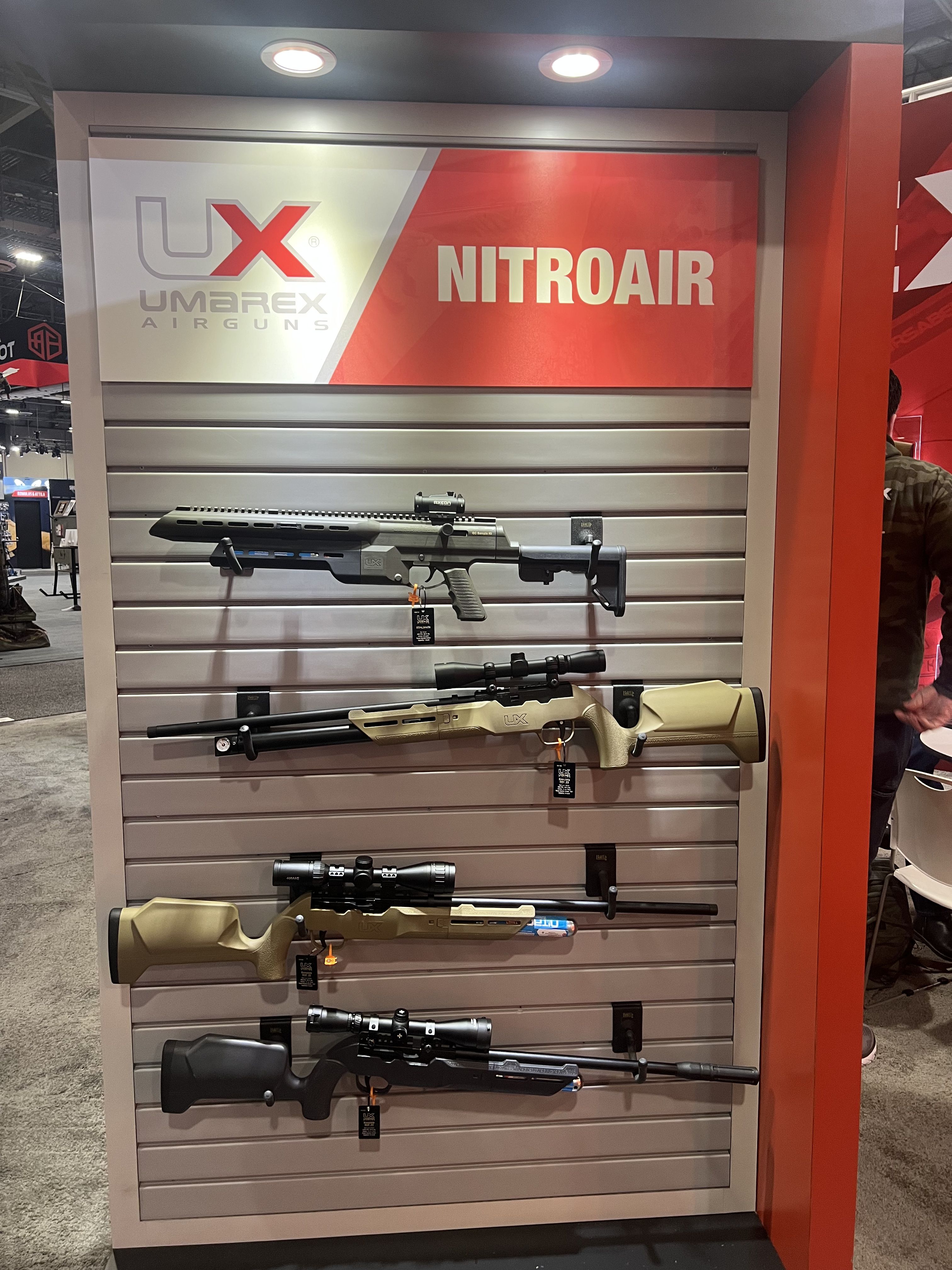
NitroAir is Umarex’s cartridge-based nitrogen system. Umarex states that its NitroAir pre-filled cartridges are filled with nitrogen at 3,600 psi, and its Komplete platform is positioned as a PCP-style air rifle system that avoids the need for an electric pump, tank, or hand pump. The Komplete NCR .177 makes that positioning clear.
What makes NitroAir important is that it changes the usual tradeoff between convenience and higher-pressure performance. Like CO2, it gives the shooter a cartridge-powered workflow instead of a cock-every-shot mechanical rhythm. Unlike CO2, it is built around high-pressure nitrogen and designed to provide a simpler entry into PCP-style ownership without asking the user to build out a fill setup. That is a meaningful difference in the real market, not just a branding distinction.
In practical terms, NitroAir matters most for shooters who want a smoother experience than spring or gas ram, but more pressure stability and a different ownership model than traditional CO2. It is not simply another gas rifle. It is a distinct branch of the decision tree. If you want the dedicated concept page, see What Is NitroAir? How Nitrogen-Powered Air Rifles Work (https://www.umarexusa.com/what-is-nitroair-air-rifle).
Multi-Pump Pneumatic Air Rifles
A multi-pump pneumatic rifle stores pressure through repeated manual pumping before each shot. Unlike a spring or gas ram rifle, where one cocking cycle stores the needed energy, a multi-pump system lets the shooter build pressure progressively. The obvious advantage is control. The equally obvious tradeoff is effort.
Multi-pump systems matter in this guide because they show how different the ownership experience can be even within the same broad category of air rifles. A multi-pump can be a sensible fit for a shooter who values variable manual input and does not mind a slower cadence. It is a poor fit for a shooter who wants rapid, low-effort repetition. That tradeoff is the point. Power systems are not just mechanisms. They are packages of compromises.
How Power Systems Affect Accuracy, Recoil, Consistency, and Effort
Accuracy in air rifles is not just a barrel question. It begins with behavior. A rifle that is easier to shoot consistently gives more shooters better real-world results than a rifle that simply posts an impressive number on a specification sheet. The power system is central to that behavior because it affects recoil character, pressure stability, and the rhythm of operation.
Why Consistency Matters More Than Advertised Velocity
Advertised velocity helps describe a rifle, but it does not tell you how stable the rifle feels over time or how repeatable its shot behavior is. A regulated, cartridge-based platform like the Komplete NCR .177 is attractive partly because Umarex emphasizes its NitroAir system, internal regulator, and consistent shot count per cartridge.
CO2 shows why this matters. A CO2 rifle can be accurate and enjoyable, but the gas system itself is more affected by temperature and rapid-use cooling. That means the user has to understand the system, not just the sight picture. When shooters say one rifle is more forgiving than another, this is part of what they mean.
Why Recoil and Hold Sensitivity Matter
Mechanical rifles ask more from the shooter because there is more internal movement happening as the pellet travels down the barrel. Spring piston and gas ram systems both involve a piston-driven shot cycle. That movement affects how the rifle wants to be held and followed through. This is why springers have a reputation for rewarding disciplined technique.
By contrast, CO2 and NitroAir usually reduce the amount of disruptive shot behavior the shooter has to manage. That does not automatically make them more accurate, but it often removes one variable from the learning curve. For backyard shooting, informal practice, and new shooters, that can be a very practical advantage.
Why Operating Effort Changes How Often People Actually Shoot
Operating effort sounds minor until you live with it. A break barrel spring rifle may be simple and dependable, but it still requires a full cocking cycle before each shot. A gas ram does too. A multi-pump adds even more pre-shot work. Over time, that affects not just comfort, but also how often the rifle gets used.
That is why convenience is not a soft consideration. It is a usage consideration. CO2 and NitroAir reduce friction between shots, and that makes them especially attractive for family shooting, plinking, skill-building sessions, and casual backyard practice. The best air rifle is not just the most capable one. It is the one you will actually enjoy shooting often.
|
Power System |
What It Feels Like in Use |
Best Fit |
Main Tradeoff |
|
Spring Piston |
Self-contained, traditional, technique-sensitive |
Shooters who want independence and long-term simplicity |
More hold sensitivity and manual effort |
|
Gas Ram |
Self-contained, smoother than spring, still mechanical |
Shooters who want a mechanical rifle with a more refined shot cycle |
Still requires cocking before each shot |
|
CO2 |
Easy, low recoil, fast follow-up shots |
Backyard shooting, plinking, beginner-friendly practice |
Temperature and rapid-fire sensitivity |
|
NitroAir |
Cartridge convenience with higher-pressure performance |
Shooters who want smoother shooting without compressors or pumps |
Depends on NitroAir cartridge availability |
|
Multi-Pump |
Adjustable manual input, slower pace |
Shooters who value control more than speed |
Repeated effort before every shot |

How to Choose the Right Air Rifle for the Way You Shoot
The smartest way to choose an air rifle is to start with the shooting environment and the shooter, not the catalog. People often buy for abstract capability and then discover the rifle does not fit their space, patience, or preferred pace of shooting.
Backyard Shooting
Backyard shooters usually benefit from systems that are easy to operate, manageable in recoil, and practical over repeated short sessions. A CO2 platform like the Umarex Fusion 2 Quiet CO2 Pellet Rifle makes sense here because Umarex positions it around quiet shooting and easy operation. If you want the dedicated use-case page, see Best Air Rifle Power System for Backyard Shooting, Beginners, and Accuracy.
NitroAir can also be a strong backyard choice for shooters who want a similarly easy shot-to-shot experience with a different pressure system and a simpler path into PCP-style ownership. At modest backyard distances, consistency and ease usually matter more than maximum power.
Beginner Shooters
Beginners benefit from systems that let them isolate the fundamentals. CO2 and NitroAir often help here because they reduce both the physical effort and the disruptive shot behavior that can distract from trigger control and sight alignment. For many first-time buyers, that smoother learning curve matters more than the appeal of a fully self-contained mechanical platform.
That said, a spring rifle can still be a very good beginner tool when the goal is to build discipline and learn consistent technique. The Ruger Blackhawk .177 Combo is the kind of rifle that teaches the shooter to pay attention to hold, follow-through, and consistency. It is not the easiest system to learn on, but it can be one of the most instructive.
Shooters Who Want a Self-Contained Rifle
If you do not want to think about cartridges, tanks, compressors, or hand pumps, mechanical rifles remain highly attractive. That is where spring piston and gas ram still earn their place. The Ruger Targis Hunter Max .22 gives you a gas piston system in a break barrel format. The Ruger Blackhawk .177 Combo represents the traditional spring route. Both keep the rifle self-contained.
This is often the right lane for shooters who value readiness, simplicity, and fewer recurring supplies. It is also a good fit for people who simply enjoy the mechanical character of airguns and do not mind a more deliberate pace.
Shooters Who Want Consistency Without Fill Gear
This is the strongest case for NitroAir. Traditional PCP ownership often involves compressors, hand pumps, or tanks. Umarex positions the Komplete NCR .177 and related Komplete system as a different entry point by pairing a PCP-style platform with removable high-pressure nitrogen cartridges. The result is a system designed to deliver regulated, higher-pressure performance without the usual fill setup.
For the right buyer, that meaningfully changes the ownership model. The question becomes less about whether you want to invest in PCP infrastructure and more about whether you want cartridge-based convenience with higher-pressure behavior.
Umarex Examples of Each System in the Real World
The abstract explanation matters, but product examples are where system knowledge becomes useful.
The Ruger Blackhawk .177 Combo (https://www.umarexusa.com/ruger-blackhawk-177-combo) represents the traditional spring piston route. It is a break barrel rifle that stays simple, self-contained, and familiar. If someone wants a rifle that operates on mechanical fundamentals and avoids cartridge dependence, that is the kind of platform that makes sense.
The Ruger Targis Hunter Max .22 (https://www.umarexusa.com/ruger-targis-hunter-max-22-black) shows what the gas ram category looks like in practice. It keeps the break barrel format, but uses a gas piston power source. That makes it a useful example of how a rifle can remain mechanically self-contained while shifting the feel of the shot cycle.
The Umarex Fusion 2 Quiet CO2 Pellet Rifle (https://www.umarexusa.com/umarex-fusion-2-quiet-co2-pellet-rifle-177-compact-airgun) is a clean example of why CO2 remains popular. Quiet-oriented design, magazine-fed convenience, and low-effort operation make it easy to understand why CO2 thrives in backyard and casual target contexts.
The Umarex Komplete NCR .177 (https://www.umarexusa.com/umarex-komplete-ncr-177-pcp-air-rifle-2251556) and NitroAir pre-filled cartridges (https://www.umarexusa.com/umarex-nitroair-prefilled-nitrogen-cartridges-2pk-2211382) demonstrate why NitroAir is strategically important in this category. The system pairs a PCP-style platform with 3,600 psi nitrogen cartridges and avoids the need for a compressor or hand pump. That gives Umarex a distinct system story, not just another product listing.
What Buyers Often Get Wrong When Comparing Air Rifles
The first common mistake is treating velocity as a complete proxy for performance. Velocity matters, but it does not tell you how the rifle behaves, how stable it feels over time, or how easy it is to shoot well repeatedly. A system that is easier to manage often produces better real-world results for more shooters.
The second mistake is ignoring operating rhythm. A rifle that requires full cocking effort before every shot may fit one shooter perfectly and another poorly. A cartridge-fed rifle may feel ideal for backyard plinking but less attractive to a buyer who wants complete independence from consumables. The right answer changes with the use case.
The third mistake is collapsing all gas-powered rifles into one category. CO2 and NitroAir are not interchangeable just because both use cartridges. CO2 and NitroAir point to very different pressure systems and ownership models. That distinction matters in real-world performance and day-to-day use.
The better buying workflow is simple: understand the system first, match the system to the use case second, and then compare products inside that narrower lane.
Air Rifle Safety Basics Still Apply
Air rifles are not toys, and the fundamentals of safe gun handling still apply. The National Shooting Sports Foundation’s safety guidance is still relevant whether the rifle is powered by a spring, CO2, or nitrogen cartridge.
A safe direction, a suitable backstop, and disciplined trigger control are not optional details. They are the conditions that make backyard shooting, practice, and skill development sustainable. That matters even more with air rifles because people sometimes underestimate them precisely because they are not firearms.
CO2 systems also require respect for gas-handling guidance. Umarex’s cold-weather guidance makes clear that abnormal temperatures and rapid shooting can affect performance. That is not just a maintenance note. It is part of using the system correctly.
Key Takeaways
-
The most important thing to understand about an air rifle is its power system, because that system determines recoil behavior, effort, consistency, and ease of use.
-
Spring piston and gas ram rifles are self-contained mechanical systems that appeal to shooters who value independence and do not mind manual cocking.
-
CO2 rifles are easy to shoot and excellent for low-effort practice, but they are more sensitive to temperature and rapid-fire cooling.
-
NitroAir gives shooters a cartridge-powered system built around high-pressure nitrogen, offering a simpler path into PCP-style ownership.
-
The best air rifle is the one that matches your real use case, not the one with the biggest number on the box.
-
For the next step in the cluster, start with Spring vs Gas Ram vs CO2 vs NitroAir Air Rifles: Which System Is Best?, then move to CO2 vs NitroAir Air Rifles: Key Differences in Performance and Consistency or Best Air Rifle Power System for Backyard Shooting, Beginners, and Accuracy.
FAQ
What is the best air rifle power system for beginners?
For many beginners, CO2 and NitroAir are the easiest systems to start with because they reduce manual effort and disruptive shot behavior. Spring piston rifles can still be good beginner tools, but they usually demand more technique and consistency from the shooter.
Is a gas ram air rifle better than a spring piston rifle?
Not automatically. A gas ram rifle often feels smoother than a traditional spring piston rifle, but both are mechanically self-contained and both still require cocking and good technique. The better choice depends on whether you prioritize traditional simplicity or a more refined mechanical shot cycle.
Is NitroAir the same thing as CO2?
No. Both are cartridge-based systems, but they operate differently. NitroAir uses pre-filled nitrogen cartridges at much higher pressure, while CO2 systems rely on carbon dioxide and are more affected by temperature and rapid-fire cooling.
Which air rifle system is best for backyard shooting?
CO2 and NitroAir are often strong backyard choices because they reduce effort between shots and tend to feel easier to manage. A quieter CO2 platform like the Umarex Fusion 2 Quiet CO2 Pellet Rifle is especially appealing when ease of use is the priority.
Do spring piston rifles require more skill?
Usually, yes. Because the rifle contains more moving mass during the shot cycle, spring piston rifles are often more sensitive to hold and follow-through than cartridge-based systems. That does not make them worse. It means they reward disciplined technique.
Do I need a compressor for NitroAir?
No. The Komplete NCR .177 is designed around NitroAir cartridges so the shooter can avoid the usual compressor, hand pump, or fill tank setup tied to traditional PCP ownership.
Are air rifles still subject to the same basic safety rules as firearms?
Yes. Safe muzzle direction, appropriate backstops, and responsible handling still apply. Air rifles should always be treated with the same seriousness required for any projectile-firing platform.
Works Cited
-
National Shooting Sports Foundation. “Safety.” NSSF. https://www.nssf.org/safety/
-
Pyramyd AIR. “How a Spring-Piston Airgun Works.” Pyramyd AIR Blog. https://www.pyramydair.com/blog/2008/12/how-a-spring-piston-airgun-works/
-
Umarex USA. “Ruger Blackhawk .177 Caliber Pellet Rifle.” Umarex USA. https://www.umarexusa.com/ruger-blackhawk-177-combo
-
Umarex USA. “RUGER TARGIS HUNTER MAX .22 Caliber.” Umarex USA. https://www.umarexusa.com/ruger-targis-hunter-max-22-black
-
Umarex USA. “Umarex Fusion 2 Quiet CO2 Pellet Rifle .177 Compact Airgun.” Umarex USA. https://www.umarexusa.com/umarex-fusion-2-quiet-co2-pellet-rifle-177-compact-airgun
-
Umarex USA. “Umarex Komplete NCR .177 PCP Air Rifle.” Umarex USA. https://www.umarexusa.com/umarex-komplete-ncr-177-pcp-air-rifle-2251556
-
Umarex USA. “Umarex NitroAir Prefilled Nitrogen Cartridges (2pk).” Umarex USA. https://www.umarexusa.com/umarex-nitroair-prefilled-nitrogen-cartridges-2pk-2211382
-
Umarex USA. “Using CO2 When It’s Cold Outside!” Umarex USA. https://www.umarexusa.com/using-co2-when-its-cold-outside-blog