
Selecting Ammo for Pepper Ball Launcher
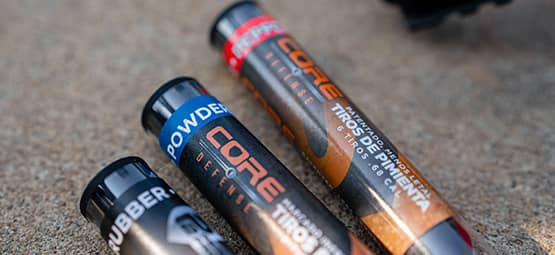
Choosing the right pepper ball ammunition isn’t about buying the “strongest” option—it’s about selecting the caliber that fits your environment, your launcher, and the role you expect it to play in your personal safety plan. At Prepared to Protect, we look at less-lethal defense the same way professionals do: effectiveness comes from fit and training, not raw power alone.
In this guide, we break down the real differences between .50 caliber and .68 caliber pepper ball ammo, focusing on how each performs in pistols versus long-gun platforms, how they behave in confined or open spaces, and what kinds of users tend to benefit most from each. Whether you’re a first-time buyer or refining an existing setup, the goal here is clarity—not sales pressure. If you are new to less lethal pepper ball guns be sure to check out this buying guide, Pepper Ball Guns 101: The Complete Guide To Less-Lethal Self-Defense.
What “Caliber” Means for Pepper Ball Ammo
Caliber refers to the diameter of the projectile, but its implications go much further than size alone. In pepper ball systems, caliber affects:
-
How much irritant powder a round can carry
-
The amount of kinetic energy delivered on impact
-
Stability in flight and performance in wind
-
Compatibility with specific launcher platforms
Unlike firearms, pepper ball launchers are caliber-specific systems. A .50-caliber pepper ball launcher, suchs as HDP .50 Gen2, is engineered only for .50 rounds, and the same is true for .68. Mixing calibers is unsafe and can damage the launcher or cause unpredictable results. This is one of the most common mistakes we see from new users, and one of the easiest to avoid with proper guidance. You will also find that long gun pepper ball launchers, like the Less lethal Shotgun or Less Lethal AR platforms, fire a .68 pepperball due to higher velocity and distance capabilities.
Construction & Types of Rounds
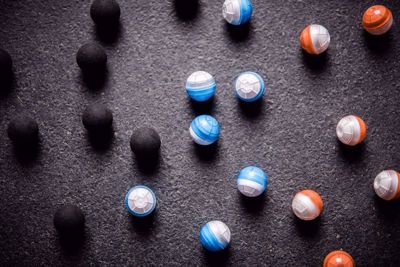
Across both calibers, pepper ball ammunition generally falls into three functional categories:
Irritant (Pepper) Rounds
These rounds contain a brittle shell filled with a pepper-based irritant (commonly oleoresin capsicum). On impact, the shell breaks and disperses powder toward the target, causing intense eye, skin, and respiratory discomfort.
Rubber Impact Rounds
Solid or semi-solid projectiles designed to deter through blunt impact alone. These are often chosen when chemical dispersal is undesirable, such as in enclosed spaces or around individuals with respiratory sensitivities.
Practice / Inert Rounds
Non-irritant rounds designed to replicate the weight and flight characteristics of live ammunition. These are essential for training and should be part of any responsible ownership plan.
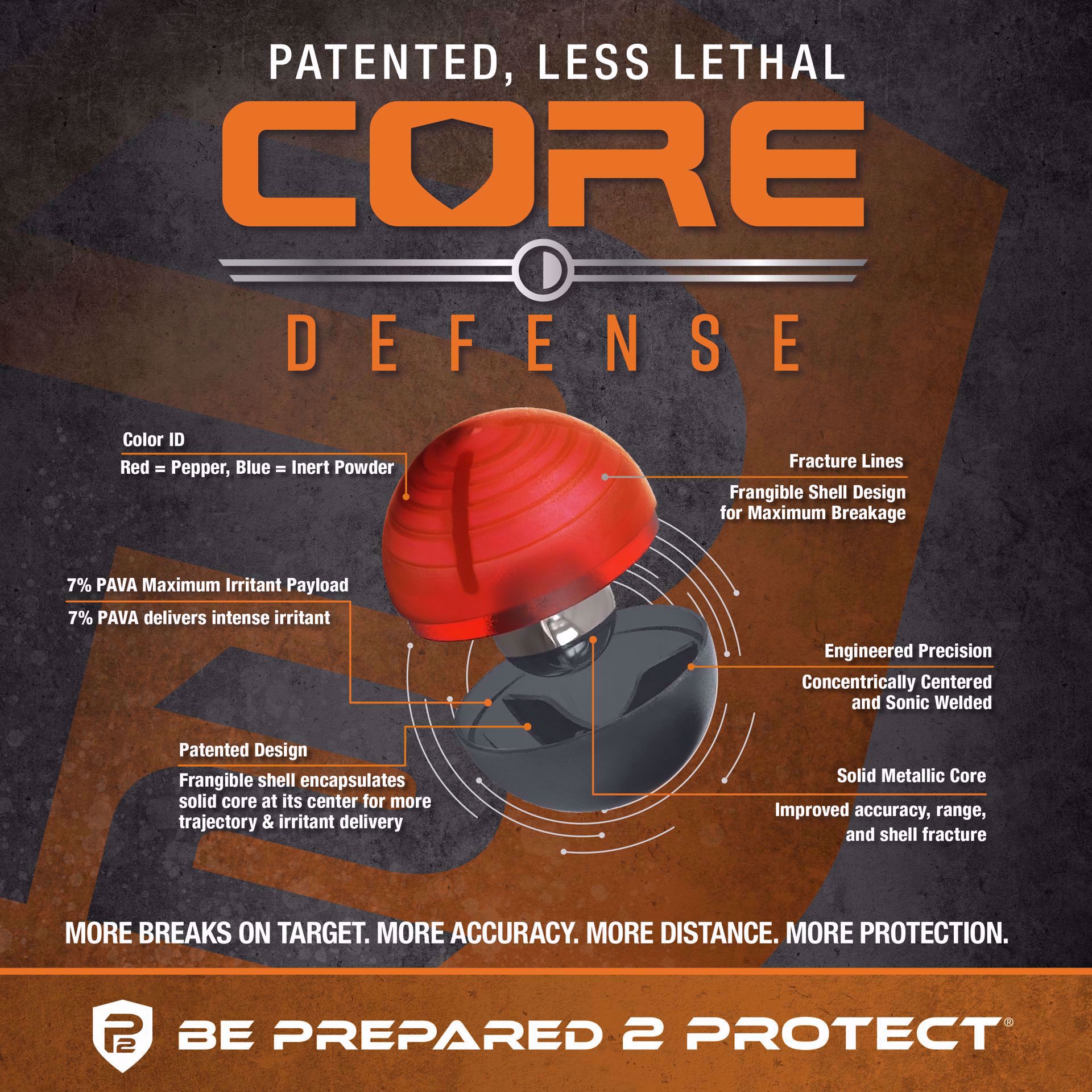
Construction quality varies by manufacturer, and not all rounds break or fly the same way. Always rely on published specifications and compatibility guidance from the launcher manufacturer. The unique benefit of the Core Defense Pepper Ball ammo is that all 3 ammo types come with a solid metal core which improve accuracy, increase impact, and ensures pepper or powder rounds break.
.50 Caliber — Characteristics & Use Cases
.50 caliber pepper ball ammo is most commonly paired with pistol-style launchers, and its design reflects that role.
Where .50 caliber excels
- Well suited for compact launchers intended for personal or indoor defense
- Lighter projectile weight allows for faster handling and easier follow-up shots
- Typically easier to control for users with smaller hands or limited recoil tolerance
- Effective at close to medium distances where precision matters
Limitations to consider
- Smaller internal volume limits the amount of irritant per round
- Reduced mass can make the projectile more susceptible to wind drift outdoors
- Less overall impact energy compared to larger calibers
For many users—especially apartment dwellers, first-time buyers, or those prioritizing portability—.50 caliber offers a balanced entry point into pepper ball systems.
.68 Caliber — Characteristics & Use Cases
.68 caliber ammunition is designed for long-gun or shotgun-style launchers, where stability and capacity take priority. However, you can now get a .68 caliber in a full size pistol with the Secure 68P Pepper Defense Kit.
Where .68 caliber excels
- Larger projectile allows for increased irritant payload or greater kinetic energy
- Performs more consistently at longer distances
- Greater mass improves stability in outdoor conditions
- Typically paired with platforms that offer better sighting and control
Trade-offs
- Not really an issue but one could say .68 launchers and ammo bulkier and heavier
- Recoil and handling may require more training time
- Often less suitable for discreet storage or rapid carry except for the Secure 68P Pistol Pepper Ball Gun
For homeowners looking to establish a fixed defensive position, such as covering a hallway, entryway, or outdoor approach, the .68 caliber systems often provide greater confidence and reach.
Performance: Range, Accuracy, & Energy
Actual performance depends on the launcher, ammunition type, barrel length, and environment, but some general patterns hold true:
- .50 caliber performs best at shorter ranges with quicker handling
- .68 caliber maintains accuracy and energy farther downrange
- Wind affects lighter projectiles more noticeably
- Indoor airflow can influence how irritant powder disperses
Responsible users should test their specific launcher-ammo combination using inert rounds before relying on it for defense. Manufacturer-published performance data should always be treated as the primary reference point.
Ammunition Selection Tips
Choosing pepper ball ammo responsibly means thinking beyond the moment of use:
- Match the caliber exactly to your launcher
- Select irritant or rubber based on your environment and occupants
- Keep practice rounds on hand for training and system checks
- Store ammunition in a cool, dry, secure location
- Rotate stock and inspect rounds periodically for damage
Preparedness is a system, not a single purchase.
Safety & Responsible Use
Both .50 and .68 caliber rounds are designed as less-lethal, not harmless. At close range, either can cause injury if misused. Chemical rounds can also affect unintended individuals in enclosed spaces.
Best practices include:
- Training with inert rounds before live deployment
- Understanding airflow and room layout when using irritants indoors
- Wearing eye protection during practice
- Securing ammunition away from children and unauthorized users
Prepared to Protect emphasizes education because safe use is inseparable from effective use.
How to Buy Ammo: Checklist
- Confirm it fits your launcher.
- Note the make date and storage tips.
- Stick to trusted brands for reliability.
- Grab a blend of live and practice.
- Monitor availability, calibers like these can go quick.
Frequently Asked Questions (FAQ)
Can I fire .68 rounds in a .50-caliber launcher?
No. Doing so is unsafe and may damage the launcher.
Which caliber hits harder?
.68 caliber generally delivers more energy, but effectiveness depends on distance, round type, and placement.
Are .50 and .68 rounds regulated differently?
Most laws focus on the launcher rather than the caliber, but local regulations vary. Always verify.
Should I prioritize practice rounds or live rounds?
Both matter. Training builds competence; live rounds ensure readiness.